
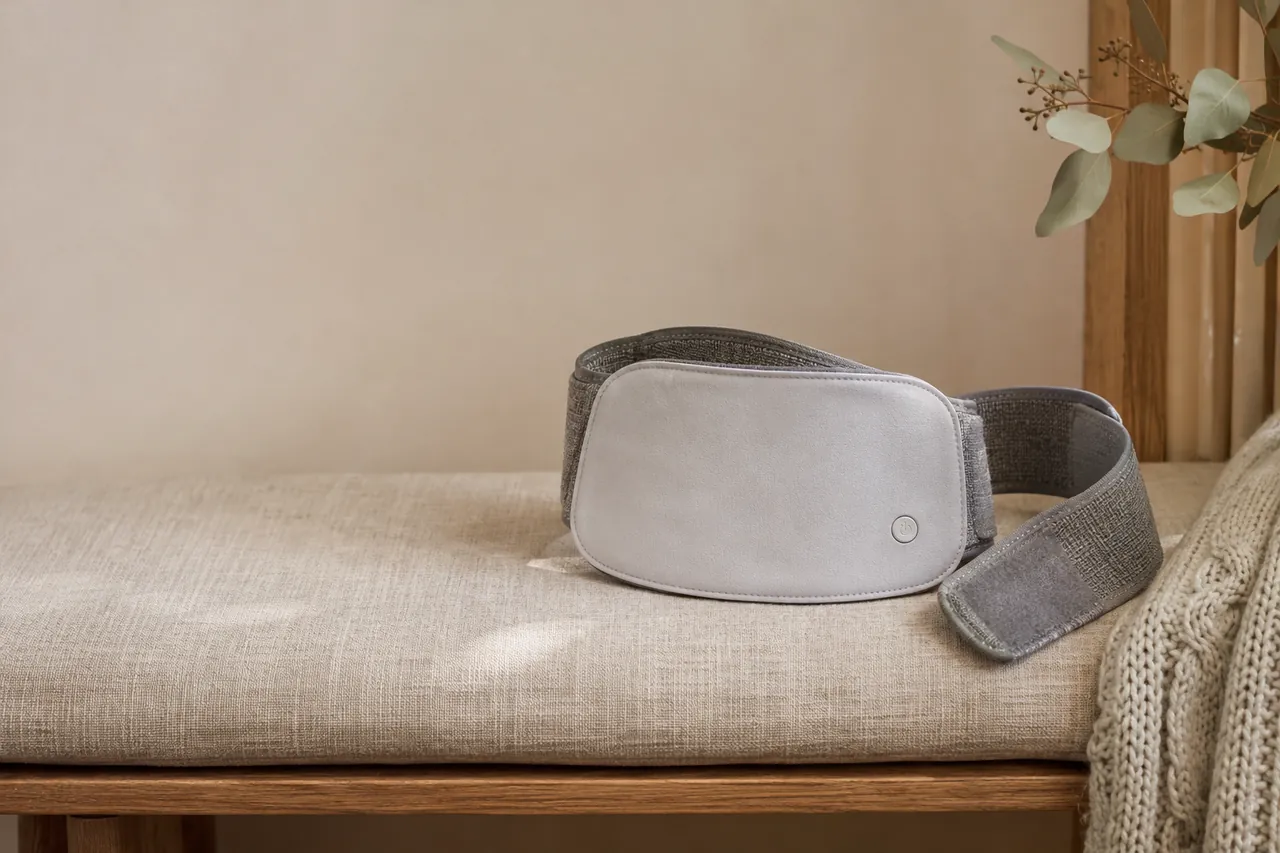
A cordless heating pad may stop warming because a timed session has ended or its battery needs attention. Comfytemp’s support information gives these possibilities for its Portable Heating Pad for Belly & Back. Start with the directions for the model in your hands; different wraps have different controls and power arrangements.
Introduction
Warmth is one option for menstrual discomfort, and Mayo Clinic lists a heating pad among self-care measures that may ease cramps. This guide uses the named Comfytemp model to illustrate checks, placement and care without assuming that every pad works alike.
When the pad does not behave as expected
First identify the symptom. A pad that switches off after a session calls for a different check from one that has no power at all. If the pad feels too hot or the skin becomes uncomfortable, switch it off and remove it immediately. Do not open the device, bypass its controls or attempt an improvised repair.
Note when the shutdown happens. If it follows the end of a selected session, the timer is one possible explanation. If there is no power when you try to begin, the connection and battery are more useful places to start. Comfytemp names both automatic shutoff and a depleted battery as possible reasons its model stops. Take a break before another session, as its guidance advises.
If your Comfytemp belly-and-back pad has no power, press the power bank button to check its charge, then check that the pad is connected to the battery. If the problem persists, stop using it and consult the product’s warranty and support information. These checks are specific to the named model; follow the instructions supplied with a different device.
Separate the timer from battery runtime
An automatic timer and a battery runtime answer different questions. A timer controls when a heating session switches off. Battery runtime describes how long a charged battery is said to supply power under stated conditions. A device can still have charge when a timer ends its session, and neither number is a universal recommendation for heat exposure.
For its Portable Heating Pad for Belly & Back, Comfytemp lists optional 15-, 30- and 45-minute shutoff settings. The same listing gives battery runtimes of up to six hours on low heat and two hours on high. The timer governs one session; the battery figure describes the power supply. Neither is a recommendation to apply heat continuously. Follow the product’s instructions and take breaks.
For an easier check next time, note the timer setting you selected and roughly when the session began. That gives you a point of comparison if the pad stops, without treating every shutdown as a fault. The remaining charge can be checked separately on the Comfytemp power bank. Stop using the device if the issue continues after its recommended checks.
Check the setup before charging
Unpack the heating pad, power components and instructions together. Identify which part provides the heat, where the controls are located and whether the battery is built in or separate. Cordless describes use without a wall cord; it does not mean that every device has the same battery arrangement or charging connection. Keep the instructions for the exact model with the device.
Inspect the pad, cable and connectors before use. Do not use a product with visibly damaged fabric, exposed wiring or a damaged battery. Follow the supplied charging instructions and use the equipment specified for that device. A connector that looks familiar does not by itself establish that another charger or power source is compatible.
Charge the device as directed and keep the charging components dry. The goal is to have a functioning device ready for a session, not to infer a universal charging time or adapter rating from another product. If the instructions distinguish between charging and wearing the pad, follow that sequence. Never force a plug into a port that does not fit.
On the Comfytemp model, the power bank and the pad are separate pieces, making their connection part of the initial setup. Before putting the wrap away, keep the power bank and its cable with it so they are easy to find for the next session. Once the components are connected, the pad's own controls govern the heat and timer settings described above.
Place the warming area comfortably
Decide whether you want warmth on your lower abdomen, lower back or both, then use the product’s placement instructions. The Comfytemp example is described with two zones; it should not be used as a template for every waist wrap. The fabric strap holds a device in position, while the heating zones are the parts described as warming.
Adjust the strap so it stays in place without squeezing. Comfytemp describes an adjustable strap for this model. Try the fit while both sitting and standing, and reposition a wrap that bunches or presses uncomfortably before switching it on.
The Comfytemp product’s FAQ suggests a thin clothing layer between the pad and skin and advises starting at a lower heat setting. Use the instructions provided with your own device for placement and the required barrier. A fabric layer helps reduce direct contact but cannot guarantee that a pad is safe if it is too hot or used for too long.
Stay awake while using an active electric heating pad. Keep it positioned as directed and avoid lying on or compressing the heating area. Check the skin during use. If the warmth becomes uncomfortable or the skin appears red or irritated, switch the pad off and remove it rather than trying to tolerate the sensation.
Clean and store the pad between uses
Start with the care label rather than a generic washing recipe. Some pads have removable electrical components or washable covers; others use different construction. Switch off and disconnect power as the instructions direct before cleaning. Do not immerse a battery, charger or controller, and do not assume the heating element itself is machine washable.
Use only the cleaning method specified for your device. If a removable fabric part can be washed, follow its actual directions and allow it and any connection points to dry completely before reconnecting power. If the pad is not washable, use the stated alternative. A clean-looking cover does not make a wet connector ready for use.
Store the product in the condition described by its instructions, with cables arranged without pulling on connectors. Keep it dry and away from circumstances the label warns against. Before the next cycle, check the fabric and connections again and make sure the power source is ready. Do not guess at a long-term battery charge percentage unless the device documentation gives one.
Make room for the rest of period care
Heat is a comfort option, not a diagnosis. Verywell Health describes warmth alongside other approaches to period cramps, and Mayo Clinic discusses exercise, stress reduction and medical treatments as well. A warm bath or gentle movement may suit one day; rest may suit another. Choose what feels manageable without treating any one device as a cure.
Repeated or prolonged heat exposure can change the skin. Cleveland Clinic describes toasted skin syndrome as a netlike discoloration associated with heat over time. Stop heat if you notice concerning skin changes, and seek care for a burn or persistent discoloration. A person with reduced sensation may have difficulty detecting excessive heat.
Pain that repeatedly disrupts ordinary activities deserves medical evaluation. Seek emergency care if pelvic pain is severe, worsening or painful with movement or touch, or if it occurs with faintness, dizziness, shoulder-tip pain, difficulty breathing, heavy vaginal bleeding or sudden confusion. If you have pelvic pain and are pregnant or might be pregnant, seek urgent medical advice. A cordless pad can make a warmth session more convenient, but it cannot identify the cause of pain or replace care when these symptoms arise.
References
Comfytemp — Portable Heating Pad for Belly & Back:
Mayo Clinic — Menstrual cramps: diagnosis and treatment:
Verywell Health — What helps with period cramps:
Good Housekeeping — Heating pad guide:
Cleveland Clinic — Toasted skin syndrome:
NHS — Pelvic pain: https://www.nhs.uk/symptoms/pelvic-pain/