
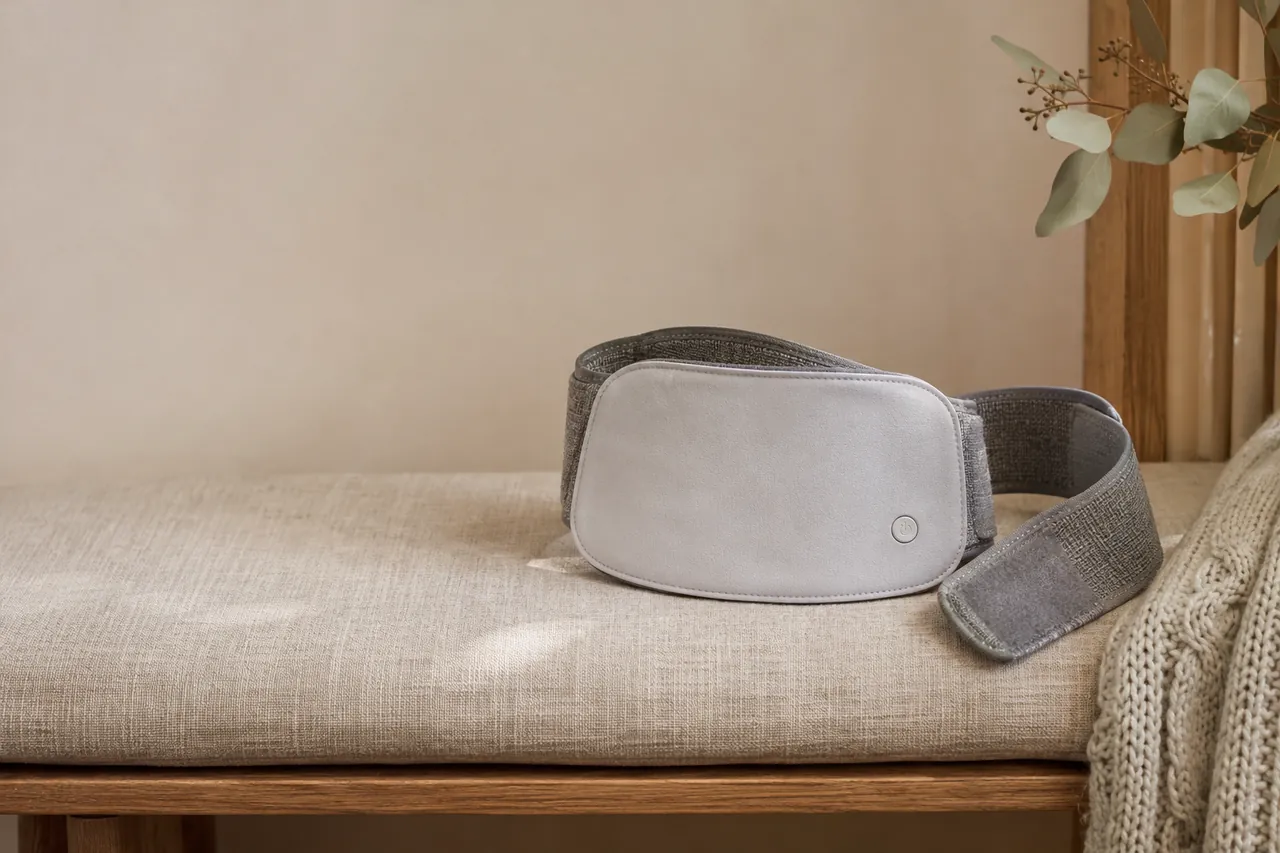
If you are looking for a menstrual heating pad at CVS, the first decision is less about a brand name than about where you want to use it. A disposable heat product may suit a day away from home; a reusable pad can be a practical choice for a familiar spot on the sofa or at a desk. Neither format has to do every job.
Introduction
Mayo Clinic includes heat on the lower abdomen among the self-care measures that can help ease menstrual cramps. The right choice is the one that fits your routine and comes with instructions you can follow comfortably. Here is how to compare the options without assuming that every patch or pad works the same way.
Two days, two different choices
Imagine a morning of classes, commuting, and meetings. A compact disposable heat product may be appealing because it does not require setting up a plug-in pad in each new place. Look at how the particular product is worn, where it is intended to be placed, and whether the package directions fit the clothes you will be wearing. A slim appearance in a product photo does not tell you everything about fit.
Now imagine an evening at home when you can sit in one place. A reusable electric pad might be a better match if a suitable outlet is nearby and you prefer a control you can reach. Check the shape and dimensions, the location of the cord, and the settings provided on the particular model. You should be able to place the pad as directed without pulling a cable tight or making a trip hazard.
Some shoppers prefer to keep both formats available: a portable option for a busy day and a reusable one for home. That is a convenience choice, not a requirement. If you mostly need warmth in one setting, a single well-matched product may be enough. Think about the actual moments you expect to use it rather than buying for every possible scenario.
Comfort begins with skin safety
Warmth should feel comfortable, not painfully hot. Use the product only where and how its directions allow, pay attention to the condition of your skin, and stop if you notice irritation or discomfort. Avoid lying on an electric pad unless its instructions explicitly call for that position, and do not fold or bunch a pad while it is operating.
Cleveland Clinic describes toasted skin syndrome as a skin change associated with repeated or prolonged exposure to heat. It can look like a mottled or netlike discoloration. The practical lesson is to take skin changes seriously: stop the heat exposure if irritation or discoloration develops, and seek medical advice if a change persists. More heat or a longer session is not automatically a better choice.
The Healthline guide to heat and cold describes heat as one way to address certain kinds of discomfort. For period cramps, Mayo Clinic specifically mentions a heating pad, warm bath, hot water bottle or heat patch on the lower abdomen. Choose the method you can use comfortably, and follow the instructions for the item rather than treating all heat sources as interchangeable.
When cramps need more than warmth
Menstrual cramps can differ from one cycle to another. Warmth may ease discomfort, but pain that disrupts daily life deserves assessment. Seek emergency care for pelvic pain that is severe, worsening or hurts when you move or touch the area, or if pelvic pain occurs with faintness, dizziness, shoulder-tip pain, difficulty breathing, heavy vaginal bleeding or sudden confusion. Get urgent medical advice for pelvic pain if you are pregnant or might be pregnant, or if you have fever or unusual bleeding or discharge. Do not rely on heat alone in these situations.
Other self-care options discussed by Mayo Clinic include exercise, a warm bath and, for some people, pain medicines. The right approach depends on the person and the cause of symptoms. A useful shopping guide should make room for that context rather than imply that a particular patch or pad will solve every kind of pelvic pain.
Read the CVS product names and counts
Searching CVS for period heat products brings together different kinds of items. Examples include CVS Health Menstrual Heat Patches, 3 CT, and ThermaCare Menstrual Pain Therapy Heatwraps, 4 CT. The names identify the type of product and package count; the listing for each item is where you can compare the particular instructions and details that matter to you.
A package count is useful when you are weighing a disposable purchase, but it does not describe how the product attaches, how long it is intended to be worn, or where it should be placed. Read the directions and warnings for the exact item. Do not transfer the instructions from a different brand or assume that a picture of a patch shows the correct point of contact with skin or clothing.
A reusable heating pad is a different purchase. Instead of comparing the number of units in a box, consider the pad’s size, the controls, its power arrangement and the cleaning instructions. Check whether the area it is designed to cover matches where you want warmth. A broad rectangular pad and a shaped wrap can feel quite different when you are sitting upright.
Compare instructions for each format
For a heat patch or wrap, check the stated placement and duration before opening it. The directions should guide how it is worn and removed. They also tell you about any conditions or situations in which the product should not be used. If a product is uncomfortable, stop using it rather than trying to make the fit work by tightening clothing over it.
With an electric pad, look for controls that are easy for you to understand and reach. Some models provide a choice of heat settings or an automatic shutoff; check the exact product rather than assuming that either feature is present. A timer does not by itself establish that a product is intended for use while sleeping. Follow the product’s instructions and turn the pad off before you fall asleep.
Care instructions deserve a quick look before purchase, especially if the pad will be used regularly. Some designs have a cover or detachable controller, but those features do not automatically mean that every part can be washed. Follow the specific cleaning and drying directions, unplug an electric device before cleaning, and do not reconnect it while damp.
For a microwavable pack, the important details are different: use only the heating method, time and placement stated for that pack. An electric pad is not a microwave product, and a disposable patch is not a reusable heating pack. Keeping those categories separate makes the instructions easier to follow.
Work out the cost of repeat use
A disposable option has a straightforward unit count and can be kept ready for the occasions when portability matters. The tradeoff is that you need to replace it after use. Before deciding, think about how many days you expect to use the product in a typical month and how often you would buy another package. Compare the current shelf or online price with the number of items included.
A reusable pad generally means paying for the device upfront rather than purchasing a fresh unit for each use. The value depends on how often you actually use it and how well it fits the places you spend time. Cleaning and storage also become part of the calculation. A less convenient pad that stays in a cupboard may not be a better fit simply because it is reusable.
To compare disposable packs, divide each current package price by its number of patches or wraps. That gives a per-item figure, not a cost per hour: the products may have different use directions. For a reusable pad, include the purchase price and the practical cost of keeping it clean and accessible; do not assume a fixed number of future uses.
Choose for the situations you actually face
For regular use at home, start with a reusable pad that fits the area you want to warm, reaches the place where you sit, and has care instructions you can manage. For days when your routine takes you away from an outlet, compare disposable menstrual heat products by their package directions, placement and count. If both situations come up often, keeping one of each is a reasonable way to avoid forcing a single product into every role.
Before buying, note where you will use the product and whether you prefer a fresh patch or a reusable device. Then compare the package directions and choose a comfortable, manageable routine.
References
Mayo Clinic — Menstrual cramps: Diagnosis and treatment.
Healthline — Treating Pain with Heat and Cold.
Cleveland Clinic — Toasted Skin Syndrome (Erythema Ab Igne).
Medical News Today — 8 of the best heating pads for pain relief.
CVS Health — Menstrual Heat Patches, 3 CT
CVS — ThermaCare Menstrual Heatwraps, 4 CT
NHS — Pelvic pain — https://www.nhs.uk/symptoms/pelvic-pain/