
A product page may offer a timer, vibration, a strap and several heat settings. Which details will matter when you are actually using a pad for menstrual cramps? Start with what the listing says about one specific device, then consider the fit, controls and care that suit your routine.
Introduction
Heat is a comfort measure, not a promise that every cramp will disappear. Mayo Clinic includes a heating pad on the lower abdomen among the self-care options that may ease menstrual cramps. The American College of Obstetricians and Gynecologists (ACOG) also lists warmth as a way to soothe period pain.
A real listing: what the features do and do not tell you
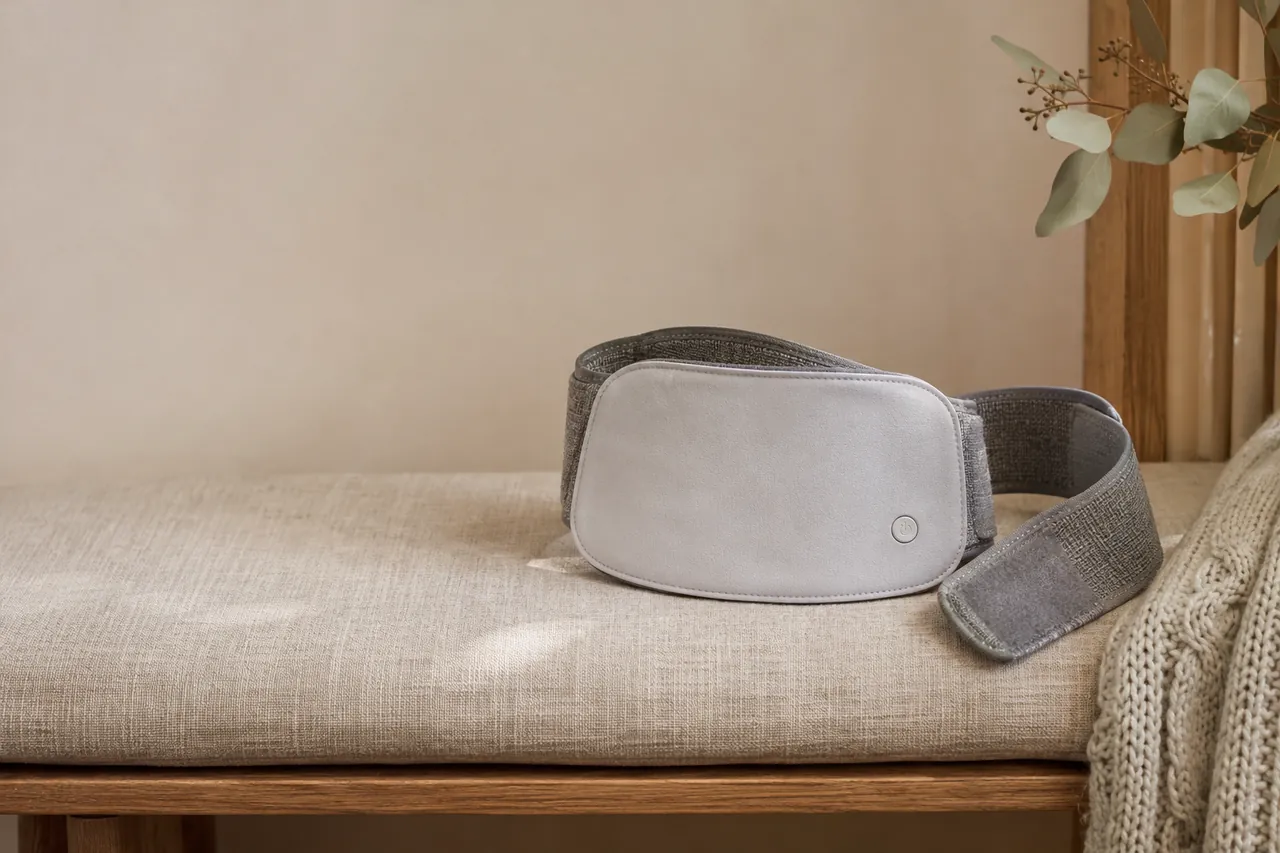
The Comfytemp Cordless XL Heating Pad with Massager is an example of a rechargeable wearable design. Its product page describes adjustable straps, three heat settings and three vibration settings. The page says heat and vibration can be used separately or together, and lists an automatic shutoff after 30 minutes. Those are details of this particular product, not standard features of all menstrual heating pads.
Fit is more than the word adjustable. Comfytemp’s FAQ gives a waist range of 23.6 to 57.1 inches for this model’s stretch belt, so measure where you plan to wear it and compare the number with that range. Consider whether you can reach the controls while seated and whether you would use vibration as well as heat. The listed size range is specific to this device.
A listing can describe what a device offers without proving that it will work identically for every wearer. There is no need to assume the most settings will make a pad more comfortable. A simple control you can understand and adjust is often more useful than a long feature list that is difficult to interpret.
Read the controls and timer
Check how to turn the pad on and off, identify its settings, and see whether the controller is easy to read. If the device has several heat levels, begin with a comfortable setting and pay attention to your skin. Turn the device off if it feels too hot; do not add towels or other unapproved layers to force continued use.
An automatic shutoff can be useful for limiting a session, but it does not tell you how warm the pad feels against your skin or whether it has shifted out of position. The Comfytemp example lists a 30-minute shutoff; another product may use a different timer or no timer at all. Follow the instructions for your own pad and do not treat a timer as permission to sleep with it running.
For a battery-powered wrap, check how the charge is indicated and how the battery connects. Use the charging equipment and power source specified in the instructions. If a cord, connector, battery, or pad appears damaged, stop using it. Do not open the electrical components or improvise a repair.
Decide between a cord and a wearable wrap
A corded pad can be convenient when your preferred seat is close to a suitable outlet. Before ordering, check the pad’s dimensions and power requirements. Think about where the controller will rest and whether the cord can reach without pulling on the pad or crossing a walkway. An outlet on the opposite side of the room can make an otherwise appealing pad awkward.
A rechargeable wearable wrap is designed for a different kind of setup. Its strap or fastening can leave your hands free, and its battery means you do not have to remain next to a wall socket while using it. In return, you need to charge the battery and store the unit and its accessories between uses. Battery arrangement and included parts vary, so check the particular listing.
Neither format determines how much coverage you will receive. A rectangular pad and a shaped belt can differ in size and placement. Measure the area you want to cover, look at the product’s stated dimensions, and check that the instructions allow the intended placement. The picture on a box may show the product on a model, but the instructions are the better guide to operating it.
Check placement and care
The pad should remain where its directions say to place it without pinching or bunching. A wearable belt needs enough adjustment to stay in position comfortably; tightness is not a sign of better heat delivery. Check that you can sit and move naturally without putting pressure on a controller or pulling a cord.
Follow the product’s instructions about contact with skin or clothing. Different heat products are constructed differently, so do not transfer placement directions from a disposable patch to an electric pad. Avoid lying on a pad unless its instructions explicitly permit that position, and remove it before sleeping.
Cleaning is just as product-specific. Some pads have washable fabric parts, while others require a different method. Disconnect power before cleaning and remove a controller or battery only as directed. Keep electrical components out of water, follow the care label, and ensure washable parts and connectors are completely dry before reconnecting power. A detachable controller alone does not prove that the whole pad can be washed.
Watch for signs of too much heat
Stop using the heat source if your skin feels painfully hot, irritated, or uncomfortable. Cleveland Clinic describes toasted skin syndrome as a netlike skin change that can develop after repeated or prolonged heat exposure, including from heating pads. Stop the exposure if discoloration appears and seek medical attention for a persistent change.
Check your skin during use rather than waiting for an automatic timer. If you have reduced sensation or another condition that affects how you feel heat, medical guidance can help you decide whether a heating pad is appropriate. The aim is comfortable warmth used as directed, not the hottest setting or the longest session.
Where heat fits in a period routine
Battery life and the length of a single session answer different questions. Comfytemp says its Cordless XL model can operate for up to 5.5 hours on low settings, depending on the mode, while its automatic shutoff activates after 30 minutes of continuous use. Those figures describe the manufacturer’s listing for that device; the battery figure is not a recommendation to keep heat against the body for hours. Check the controls and instructions for the particular pad you choose.
That does not make electricity essential. A warm bath, hot water bottle, or heat patch may fit someone else’s needs better. The choice comes down to what is comfortable and practical for you. If you already know you prefer a small, portable option, start there rather than assuming a large plug-in pad is the only way to use warmth.
Period pain itself also varies. The NHS describes several possible causes of pelvic pain, including conditions such as endometriosis. A warming product cannot identify the cause. Note whether pain changes from your usual pattern or begins interfering with ordinary activities; those details can help when describing symptoms to a clinician.
Know when pain deserves assessment
Warmth can sit alongside other self-care approaches. Mayo Clinic and ACOG discuss options such as exercise and a warm bath, while Verywell Health describes additional ways people manage cramps. Your routine can change from one cycle to another; choose measures that feel manageable and follow directions for any medicines you take.
Pain that disrupts work, school, or ordinary activities deserves medical evaluation. Seek emergency care for pelvic pain that is severe, worsening or hurts when you move or touch the area, or if pelvic pain occurs with faintness, dizziness, shoulder-tip pain, difficulty breathing, heavy vaginal bleeding or sudden confusion. Get urgent medical advice for pelvic pain if you are pregnant or might be pregnant, or have fever or unusual bleeding or discharge. A heating pad cannot replace care in these situations.
To choose an electric menstrual heating pad, start with where you will use it, then compare the fit, power source, controls, and care instructions. Keep the product’s directions close at hand, check your skin, and select the setup that works for the way you actually spend your day.
References
Mayo Clinic — Menstrual cramps: Diagnosis and treatment.
American College of Obstetricians and Gynecologists — Dysmenorrhea: Painful Periods.
Cleveland Clinic — Toasted Skin Syndrome (Erythema Ab Igne).
Verywell Health — 15 Things to Help With Period Cramps on Pain Days.
Comfytemp — Cordless XL Heating Pad with Massager.
NHS — Pelvic pain — https://www.nhs.uk/symptoms/pelvic-pain/