
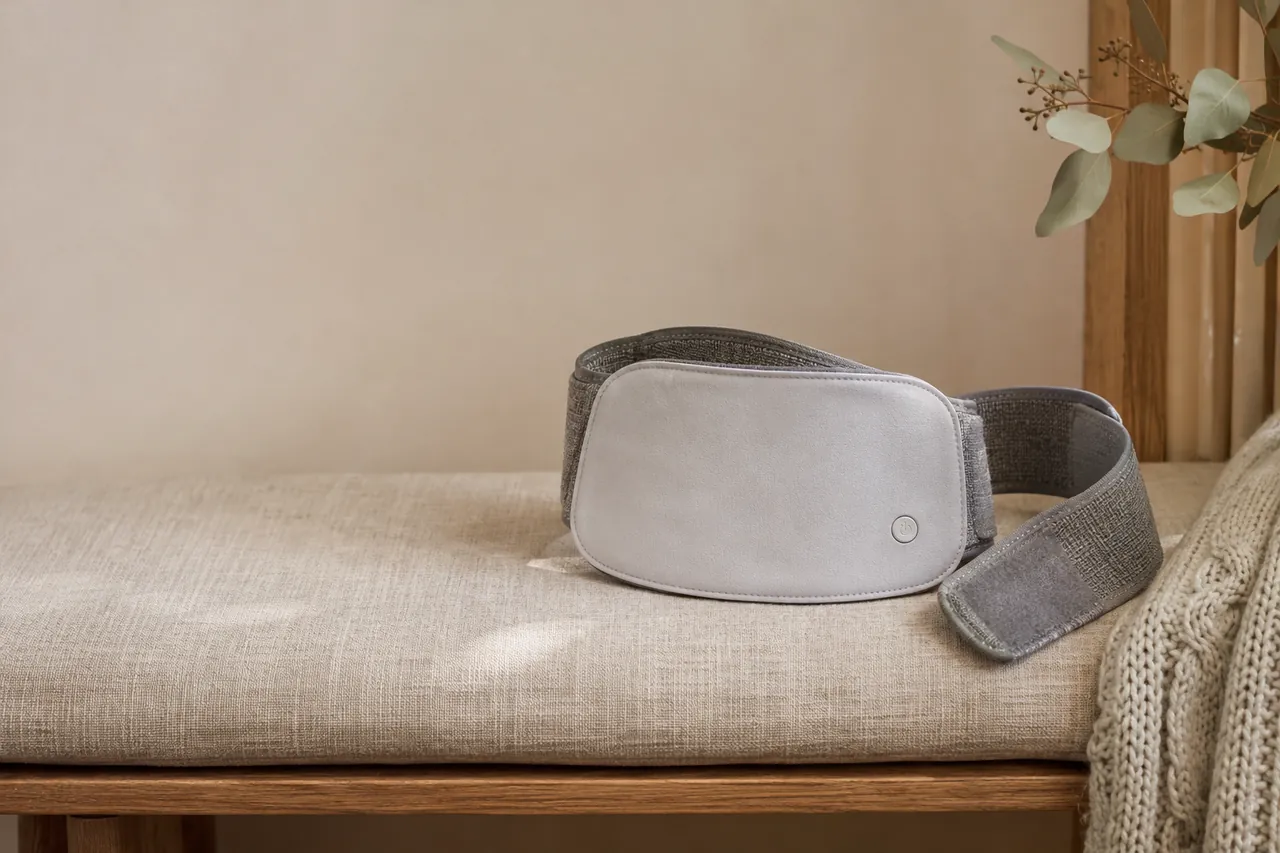
Searching for a menstrual heating pad at Etos can bring up several Dutch product names. A warm-koud kompres is a warm-and-cold compress; a kruik is a hot water bottle; and menstruatiepijn means menstrual pain. These names point to different ways of applying warmth, with different preparation and care instructions.
Introduction
Etos is a Dutch drugstore retailer. Its period-discomfort advice mentions a warm bath or shower and a warm water bottle, while its product pages include a warm/cold compress. Here is how to understand those options alongside electric and wearable heating pads, and how to use warmth thoughtfully for cramps.
The Dutch words that make a search easier
Start with the symptom: menstruatiepijn means menstrual pain, while menstruatiekrampen means menstrual cramps. Add the name of the product you have in mind to narrow the results. Searching for menstruatiepijn alone can bring up advice about symptoms and pain relief as well as products; adding kruik or warmtekussen makes the kind of warmth you want clearer.
A kruik is a hot water bottle, a familiar non-electric source of warmth. A warmtekussen is a warming cushion or heat pad; depending on the particular item, it may be heated separately or powered electrically. An elektrisch warmtekussen is an electric heat pad. Do not assume that products sharing a broad name have the same heating method or instructions.
Warm-koud kompres means warm/cold compress. The Etos item described below is a gel compress that can be used warm or cold. The word hoes refers to a cover. These small distinctions matter when reading the package: the cover, gel insert and heating method each have a role, and the instructions for one product do not automatically apply to another.
What the Etos warm/cold compress actually is
Etos lists a warm/cold compress with a cover. Its product directions describe warming the gel pack in water or in a microwave, then placing it in the supplied cover before applying it. The item is a non-electric compress: it is heated first and then used without a cord or battery. It is not a rechargeable menstrual belt. Etos describes it for sports and muscle injuries; the listing does not present it as a menstrual-specific product.
The same product is also described for cold use. For period cramps, the relevant choice here is its warm application. Check the current package directions for the exact preparation method and timing, and ensure the temperature feels comfortable before use. The supplied cover is part of the product’s directions; a cover reduces direct contact but does not make an overheated pack safe.
At 28 by 9.5 centimeters, the listed compress has a long, narrow shape. Before buying, picture how that shape will sit across the area you want to warm: it may feel different from a larger cushion or a wrap that fastens at the waist. Once prepared, the gel cools gradually; a powered pad has a different setup and may provide controls for its heat.
The Etos health article also mentions a warm water bottle for menstrual pain. That is a different product: it holds water rather than a gel insert. Follow the bottle’s own filling and closure instructions and take care to avoid spills or scalds. A cover or a layer recommended by the product directions helps manage contact with the skin; check that the bottle is intact before use.
Comparing a compress, a bottle and a powered pad
The choice begins with where you plan to use warmth. A compress or hot water bottle can be prepared and then carried to a chair or bed while you are awake. An electric pad draws power from an outlet or battery, depending on its design. Some wearable models attach around the waist, while a flat pad is usually positioned over the area you want to warm.
Controls are another difference. A gel compress does not have a control that increases its heat after preparation. Some electric pads offer adjustable settings or timers, but those features are model-specific. A rechargeable wrap requires charging, and its battery runtime is not the same thing as a recommended duration against the skin. Read the device directions rather than treating a large runtime number as a wear instruction.
A comparison on a shelf can be misleading when the packages use the same word for different formats. Look for whether the heat source is gel, hot water or electricity, then check how the item stays in place. A strap changes the way a wrap is worn; a removable cover changes what you can take off for cleaning. Neither feature tells you a pad’s temperature or battery life.
Consider placement and fit before additional features. If you want warmth over your lower abdomen, the heating area needs to sit there comfortably without slipping or feeling restrictive. If you prefer warmth at the lower back, check whether the product’s shape and instructions support that placement. The surface that produces warmth is not necessarily the same size as the strap or cover.
Think through the interruption you are willing to manage. With a gel pack, you may get up to prepare it again as it cools. With a corded pad, the distance to an outlet affects where you can sit; with a rechargeable wrap, charging becomes part of the routine. Check the individual cleaning instructions too, because a fabric cover and the component that produces heat may need different care.
Preparing warmth without overheating
For the Etos compress, follow its current label for water or microwave preparation, including the specified steps and limits. Place it in the supplied cover as directed and test that the warmth is comfortable. If it feels too hot, let it cool before use. Inspect the pack and follow the label if it is damaged or leaking; do not apply a damaged product.
Only microwave a product specifically labeled for that purpose. Never place an electric heating pad, charger, controller or battery in a microwave. A hot water bottle should be filled according to its own directions, not the directions for a gel pack. Avoid improvising a heating method because the shape of two products looks similar.
Check your skin during use and stop if the area becomes uncomfortably hot, irritated or red. Avoid lying on top of an active heating pad or fastening a wearable device so tightly that it creates pressure. Stay awake when using an active electric pad and switch it off before sleep. A timer is helpful for the device’s operation, but it does not replace attention to skin comfort.
Cleveland Clinic describes toasted skin syndrome as a skin change associated with repeated or prolonged exposure to heat. It can appear as a netlike pattern of discoloration. Stop exposing the area to heat if you notice concerning changes, and seek medical care for persistent discoloration or a burn. People with reduced sensation can have more difficulty noticing excessive heat.
Where heat fits in period care
Mayo Clinic includes a heating pad, heat patch, hot water bottle and warm bath among approaches that may ease menstrual cramps. Verywell Health also discusses heat within a wider list of ways to manage period pain. Warmth is a comfort measure; it does not identify the cause of pain or guarantee the same response for every cycle.
Other measures can fit alongside warmth. Etos’s advice mentions rest and a warm bath or shower; Mayo Clinic also discusses exercise and stress reduction. Choose an activity that feels comfortable, whether that is a short walk or a quiet break. The goal is to make the day more manageable, not to force a fixed routine when symptoms call for something different.
Some people use nonprescription pain relievers for cramps. Follow the medicine’s label and any individual medical advice, as not every medicine is suitable for everyone. A heating product is a separate choice and should not be described as automatically equivalent to medication or as a cure for an underlying condition.
Pain that regularly prevents work, school or normal activities deserves medical evaluation. Get emergency help for severe or worsening pelvic pain, pain that hurts when you move or touch the area, or pelvic pain accompanied by faintness, dizziness, shoulder-tip pain, difficulty breathing, heavy vaginal bleeding or sudden confusion. If you have pelvic pain and are pregnant or might be pregnant, seek urgent medical advice. A heating product cannot identify the cause or replace care in these situations.
A useful label-reading checklist
Before choosing, identify the format, the intended body area and the preparation method. For the Etos warm/cold compress, look for the directions for warm use and the supplied cover. For a hot water bottle, check its filling and care instructions. For an electric or wearable pad, look for its controls, power source and safety directions.
For a quick Dutch search, pair your preferred format with menstruatiepijn: try kruik for a water bottle, warm-koud kompres for a reusable pack, or elektrisch warmtekussen for a powered cushion. Open the individual listing to check the size, cover and preparation details before deciding. If you already own a heat product, take a moment to find its instructions before you need it, so preparation is straightforward when cramps begin.
References
Etos — Warm-Koud Kompres product page:
Mayo Clinic — Menstrual cramps: diagnosis and treatment:
Medical News Today — Heating pads for cramps, redirected to heating-pad overview:
Verywell Health — 15 things to help with period cramps:
Cleveland Clinic — Toasted skin syndrome:
NHS — Pelvic pain — https://www.nhs.uk/symptoms/pelvic-pain/