
Before you switch on a heating pad for period cramps, identify what you have. A plug-in pad, a rechargeable wrap, a disposable patch and a microwaveable insert can all provide warmth, but their setup and care instructions are different. The label and manual for your own model are the starting point.
Introduction
This guide uses the corded PureRelief Lumbar & Abdominal Heating Pad as a worked example, then explains what to look for when your product uses a different source of heat. Mayo Clinic includes applying heat among the self-care measures that may ease menstrual cramps. Your heating pad instructions tell you how to use a particular device while you are awake and able to monitor your skin.
First, identify your heating pad
A corded electric pad connects to an outlet and has a controller. A rechargeable wrap uses a battery, while an air-activated patch is typically taken from a sealed package before use. A microwaveable insert is a separate type of product whose heating directions apply to the insert specified on its label. Looking at the shape alone does not tell you which instructions apply.
Find the model name on the product or its packaging. Read the placement, power, cleaning and safety directions together: a picture on the front of a box cannot explain every condition of use. For a menstrual heating pad, check whether the product is intended for the abdomen or lower back and how it is held in place. Keep the instructions accessible for the next use.
A worked example: the PureRelief corded pad
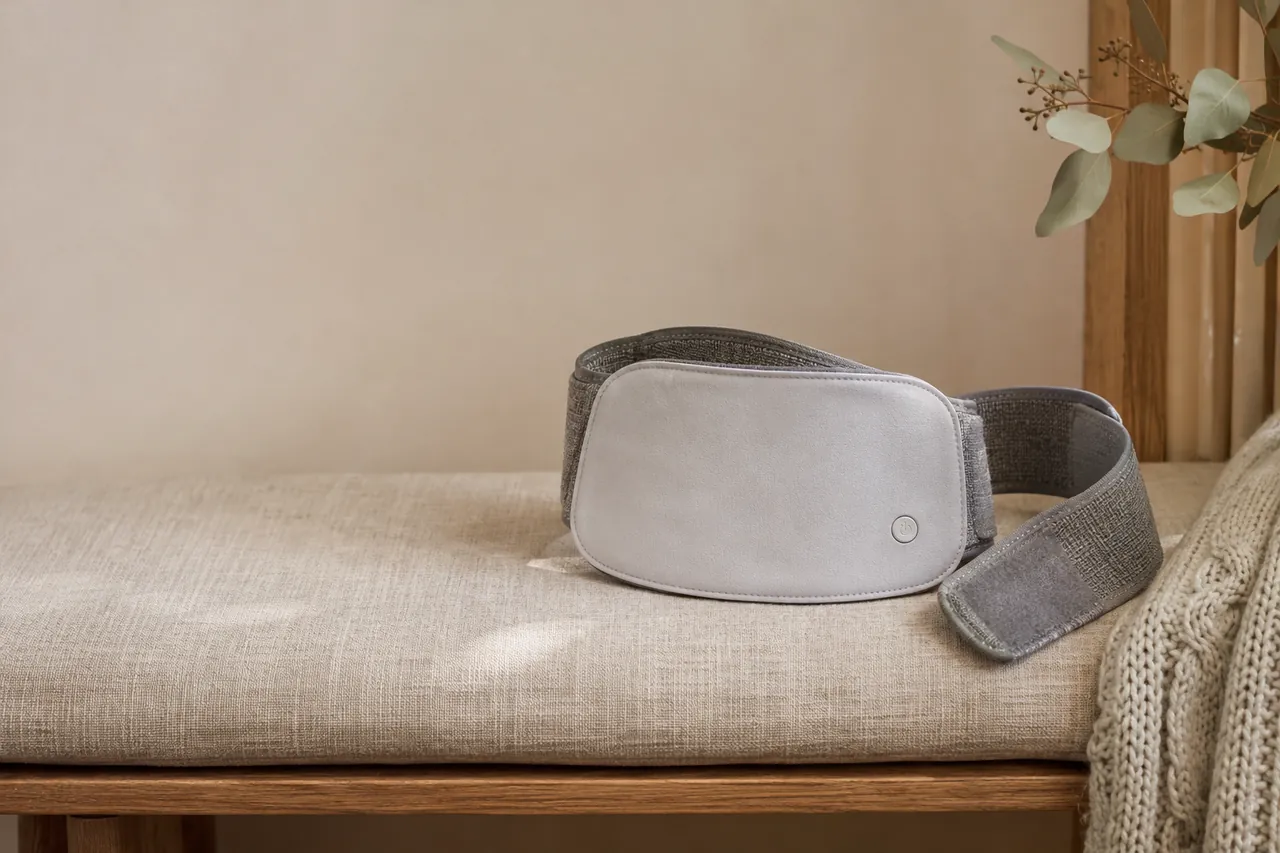
Pure Enrichment describes its PureRelief Lumbar & Abdominal Heating Pad as a corded pad with adjustable straps and four heat settings. Its product information also lists a detachable controller and an automatic shutoff. The following sequence concerns this model; different brands and even other PureRelief models can have different controls or power sources.
1. Connect the controller before the outlet
With the pad unplugged, connect its detachable controller to the pad first. The PELUMBAR-G manual specifies a 110–120 V AC circuit and says not to use generators, power converters or inverters. Plug the cord into the appropriate wall outlet only after connecting the controller. Keep the cord and controller accessible so the pad can be switched off and unplugged after use.
Look over the pad and cord before use. Do not use a damaged heating product, and do not improvise a repair. Set up in a place where the cord does not need to be pulled tight or trapped underneath your body. These small checks help keep the operating controls within reach when you want to change the setting or finish.
2. Place it where the model is designed to sit
Position the pad over the lower abdomen or lower back as described for this lumbar and abdominal model. Its adjustable straps hold it in position; fasten them comfortably rather than pulling them tight. Keep the heating surface flat and avoid bunching or folding it during use. Adjust your position if the pad shifts or the strap becomes uncomfortable.
Do not sit on, crush or lean against the pad. The manufacturer warns against applying pressure to it. Choose a position that lets you reach the controller and inspect the area underneath, rather than one that pins the pad between your body and a chair or mattress.
3. Select a setting and keep checking
This PureRelief controller lists Warm, Low, Medium and High. Use the controls for the model you own and choose a comfortable setting. Heat can cause burns even at a setting that initially feels manageable, so check your skin frequently throughout use. Stop using the pad if it becomes uncomfortable or your skin shows irritation.
The manufacturer’s instructions say not to use this pad while sleeping or on insensitive skin. They also warn against using it with topical ointments. The manual says not to use this model on infants or animals, and specifies careful attendance for use by or on someone who is incapacitated or unconscious, has diabetes, or has poor circulation. If you are likely to fall asleep, turn it off and remove it first. A heating pad needs your attention during use; it is not something to switch on and forget.
4. Understand what automatic shutoff means
Pure Enrichment lists a 120-minute automatic shutoff for this particular model. That number describes a device feature, not a recommended treatment duration. Do not use the timer as a reason to continue when your skin is irritated, and do not treat automatic shutoff as permission to sleep with the pad on.
On this model, the red auto-off light blinks when the feature activates. The manual also says the timer resets after a power outage, so the light and elapsed time answer different questions. The shutoff does not replace checking your skin, and these indicator details should not be assumed to apply to another heating pad.
5. Switch off, unplug and follow the care label
When finished, turn the controller off, unplug the pad and let it cool. Pure Enrichment describes the fabric of this model as machine washable; its manual sets out a warm-water wash, cool rinse and drying instructions, and says not to iron the pad. Disconnect the controller before cleaning, keep electrical controls out of water and let the pad dry completely before reconnecting it.
For PELUMBAR-G, the manual describes soaking the pad in warm water with a small amount of detergent, followed by a cool rinse. It gives two drying options: line drying, or a short, specified dryer cycle followed by finishing the drying on a line. Read the complete manual before washing, and keep the controller disconnected and dry. Other models can have different care requirements.
What about the separate gel pack?
The PureRelief product includes a separate hot and cold gel pack. The pack and the electric pad are different components, with different instructions. Follow the manufacturer’s directions for the gel pack itself, including the preparation and handling steps. Never put the electric heating pad, controller or power cord in a microwave.
If your product includes a removable insert, identify the insert before doing anything else. A direction for the insert does not authorize heating the fabric appliance or its electronics. Likewise, a time printed for one pack is specific to that pack and should not be transferred to another model.
How instructions change with the heat source
A rechargeable wrap adds a charging step that the corded PureRelief example does not have. Follow the charging and operating directions supplied with that wrap, and separate battery runtime from the recommended way to use it. Runtime tells you about the power supply; it does not by itself establish how long heat should stay against your skin.
A disposable heat patch has its own placement directions. Some designs attach to clothing, while others have different instructions for the adhesive and body area. Read the individual label before opening the pouch, and follow its limits and warnings. Do not assume that a patch can be reheated, reused or worn for the same length of time as a different brand.
A microwaveable pouch or insert should be heated only when its own label says it is microwaveable. Follow its listed preparation and reheating instructions, rather than borrowing a time from a video or a different product. An insert that feels too hot should not be placed against the body until it is suitable for use under its directions.
Pay attention to your skin and symptoms
Check the area beneath your heating pad regularly, even when the warmth feels pleasant. Cleveland Clinic explains that repeated exposure to heat can cause a net-like skin discoloration known as toasted skin syndrome. Stop applying heat if you notice irritation or unusual discoloration; persistent skin changes deserve medical attention.
Heat is one option for menstrual comfort, but a pad cannot identify the cause of pain. Symptoms that repeatedly disrupt normal activities deserve medical evaluation. Get emergency help for severe or worsening pelvic pain, pain that hurts when you move or touch the area, or pelvic pain accompanied by faintness, dizziness, shoulder-tip pain, difficulty breathing, heavy vaginal bleeding or sudden confusion. If you have pelvic pain and are pregnant or might be pregnant, seek urgent medical advice. Mayo Clinic describes evaluation and treatment options for menstrual cramps.
Keep the PureRelief manual with the pad so its connection sequence, indicator meanings and washing directions are available next time. If the high indicator blinks as an error, the manual says to unplug the pad and check the cord, outlet and connection; if blinking continues after confirming the connection, discontinue use and follow the manufacturer's support instructions. Do not open or repair the electrical unit yourself.
References
Pure Enrichment — PureRelief Lumbar & Abdominal Heating Pad: https://pureenrichment.com/products/purerelief-lumbar-abdominal-heating-pad-gray
Pure Enrichment — PELUMBAR user manual: https://pureenrichment.zendesk.com/hc/en-us/article_attachments/30751208798491
Mayo Clinic — Menstrual cramps: diagnosis and treatment: https://www.mayoclinic.org/diseases-conditions/menstrual-cramps/diagnosis-treatment/drc-20374944
Verywell Health — 15 Things to Help With Period Cramps on Pain Days: https://www.verywellhealth.com/what-helps-with-period-cramps-8413517
Cleveland Clinic — Toasted Skin Syndrome: https://my.clevelandclinic.org/health/diseases/toasted-skin-syndrome
Good Housekeeping — Heating pad buying guide: https://www.goodhousekeeping.com/health-products/g30647898/best-heating-pads/
NHS — Pelvic pain: https://www.nhs.uk/symptoms/pelvic-pain/