
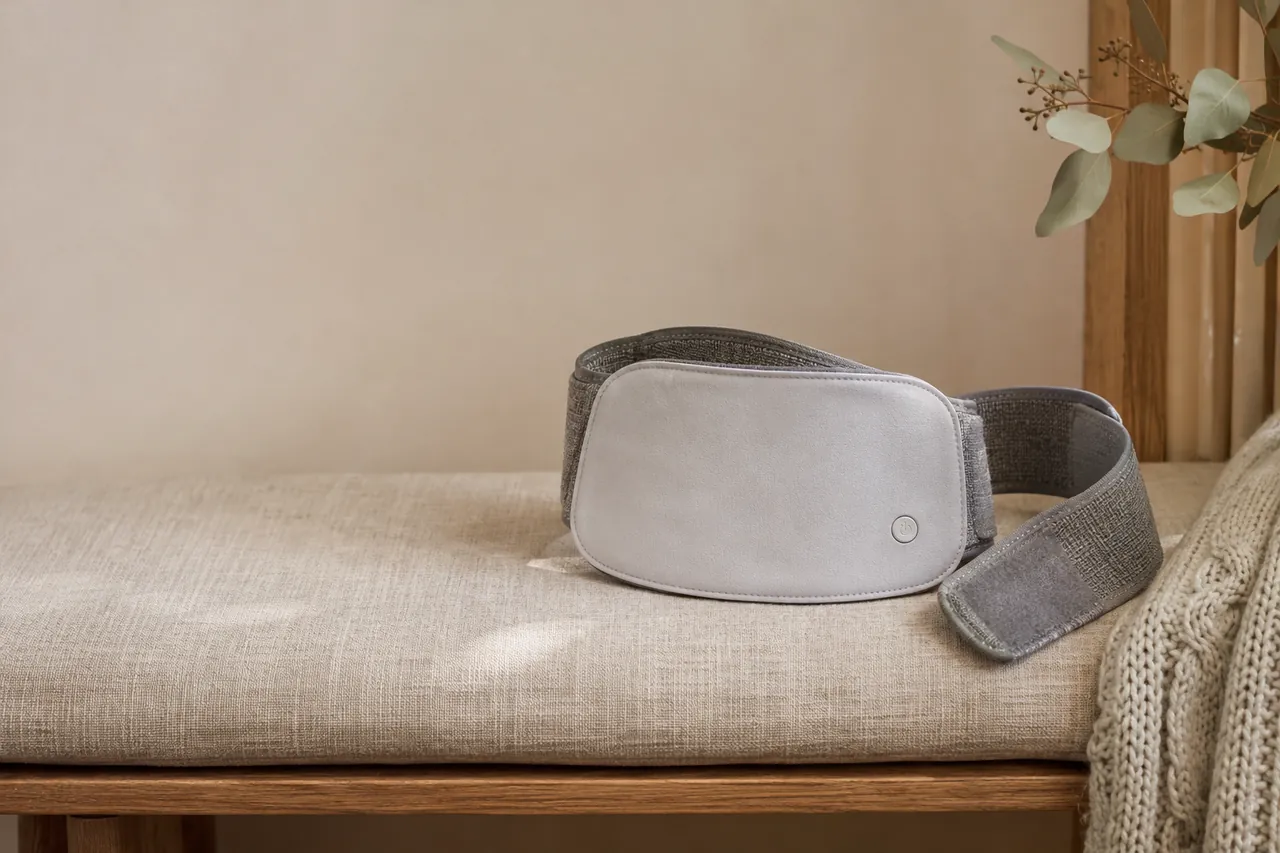
A search in Mauritius can bring up two very different purchases: a pack of self-heating CAREPLUS patches on Glowtime and a USB-rechargeable heating belt on Bayzon. One is a disposable item; the other needs charging and care between uses. The right comparison starts with how each item is prepared and worn, as well as the total cost and delivery terms for the exact listing.
Introduction
Warmth is one option for period comfort. The NHS includes a heat pad or a hot-water bottle wrapped in a towel among its self-care suggestions, alongside gentle exercise. This guide looks at what research says, how the local product formats differ and what to check before use. A heat product cannot identify the cause of pain; severe or worsening pelvic pain needs emergency care.
What does the evidence say about heat for cramps?
Period pain often starts around the beginning of a period and can spread from the abdomen to the back or thighs. The NHS explains that menstrual pain occurs when the womb contracts, although conditions such as endometriosis or fibroids can also cause painful periods. Pain has a context; its cause cannot be determined from a heating pad listing.
A systematic review published in 2026 looked at trials of heat for primary dysmenorrhea, the term for recurring period pain without an identified underlying pelvic condition. The authors found that heat may reduce pain compared with no treatment, but rated that evidence as low certainty. The trials involved different methods of applying heat; their findings do not establish that any particular retail belt, patch or brand is the best choice.
That distinction matters when reading advertising. A study about a category of heat treatment is not a test of every product that appears beside it in search results. A temperature printed on a package, a claim about a special material or a vibration setting does not by itself show that the item works like a medicine. Look for the product’s actual instructions and evaluate its features on their own terms.
The Comfytemp period-care article discusses warmth among non-drug options for a more comfortable day. The NHS similarly mentions a warm bath or shower, gentle movement such as walking and a heat pad. These approaches can be combined with appropriate medical care; they do not require pushing through pain that has become difficult to manage.
A local choice: patch, rechargeable belt or home warmth
Mauritius-facing listings show how varied the search results can be. Glowtime describes a CAREPLUS lower-abdomen heating pad sold as a pack of five disposable patches. Its listing describes a self-heating product, so there is no battery to recharge. Read the package directions for placement and wear, including any restrictions, rather than assuming that another patch’s instructions apply.
Bayzon lists a portable electric heating belt for the abdomen and waist and describes USB charging and a rechargeable battery. That is a different type of item: it needs to be charged, maintained and stored between uses. Check the exact listing and included instructions for the controls, fit, charging equipment and cleaning method before deciding whether it suits your routine.
A third option may already be at home: the NHS suggests a hot water bottle wrapped in a tea towel. It needs hot water and careful handling, but does not require charging or disposable patches. Keep the bottle and its closure in good condition, use a suitable cover and stop if the warmth is uncomfortable. Do not treat a generic online guide as permission to microwave a bottle or any electric device.
As a dated example, Bayzon displayed the portable belt at Rs 650 with free delivery when checked on November 10, 2026. That is the listed price of one device, not a prediction of its lifetime cost. For the patch option, count the pads in the chosen pack and add the seller’s delivery charge before comparing totals. Prices, promotions and fulfillment terms can change.
A useful shopping note separates the purchase from the routine: record the patch pack size and how many sessions it covers, then record the belt’s charging arrangement and any components included in its listing. Check the seller’s current availability and return terms before ordering. The listings describe the products; they are not personal tests or proof that one will provide better relief.
Fit and controls matter more than a long feature list
Imagine using a pad while seated at a desk. A wearable design may be easier to keep in position than a flat pad, but a strap still needs to fit comfortably without pressing hard. If you mainly use warmth while resting at home, a simple covered hot water bottle or a pad intended for stationary use may be more convenient. Follow the placement directions for the specific product rather than adjusting it into a position its instructions prohibit.
The Sunbeam GoHeat product page describes one cordless heating pad with an adjustable strap and removable rechargeable battery. Its listing illustrates a design, not a guarantee that the same model is sold locally. The model 2000-825 manual says not to sit on, lean against or crush the pad, and places restrictions on use by children and people with diabetes, poor circulation or insensitivity to heat. Those are instructions for that model.
Comfytemp’s collection presents pads in several shapes, a useful reminder that an abdominal wrap, a back pad and a neck wrap are not interchangeable. Look at the area the product is designed to cover, how its controls can be reached and whether its shape fits the position you intend to use. More settings are not evidence of stronger relief, and an automatic shutoff is not a prescribed treatment duration.
For a rechargeable belt, read the instructions for its supplied charging equipment and where the controller or battery sits. For a corded model, check the product’s rated input and whether it matches the electrical supply where you will use it. A plug adapter changes the shape of a connection; it does not establish that a device is compatible with the supply.
A skin-conscious routine
Use the product only as directed, check your skin during use and stop if it becomes irritated or the heat feels uncomfortable. Do not sleep with an active electric heating pad. If a product cannot be positioned without folding, crushing or sustained pressure against it, reconsider the setup and follow its instructions. Do not stack heat sources to try to make them work faster.
Healthline’s overview distinguishes heat from cold and notes that heat is not appropriate for every injury or medical situation. If you have reduced sensation or a condition affecting circulation, follow the warnings on the device and relevant clinical advice. Product-specific restrictions can be stricter than a general article, as the GoHeat manual demonstrates.
Cleaning is also model-specific. Some covers or pads may be washable after electrical components are removed; others require spot cleaning. Disconnect the power and follow the care label, keeping electrical components dry and allowing permitted washed parts to dry completely before reconnecting. Never assume a disposable patch can be reheated or reused.
When the plan needs more than heat
Seek emergency care if pelvic pain is severe, worsening or painful with movement or touch, or if it occurs with faintness, dizziness, shoulder-tip pain, difficulty breathing, heavy vaginal bleeding or sudden confusion. If you have pelvic pain and are pregnant or might be pregnant, seek urgent medical advice. Arrange a medical assessment if period pain stops normal activities, periods become more painful, heavier or irregular, or there is bleeding between periods. Pain during sex or when passing urine or stool also deserves attention.
A brief symptom record can make the conversation easier: note when pain starts in your cycle, where you feel it, how it affects work or sleep, and what you have tried. Heat can be one useful part of a period-care routine; a change in symptoms is information worth acting on rather than a reason to increase the heat.
References
NHS — Period pain: https://www.nhs.uk/symptoms/period-pain/
Yuan et al. — Heat therapy for primary dysmenorrhea, systematic review and meta-analysis: https://pubmed.ncbi.nlm.nih.gov/41657584/
Glowtime — CAREPLUS Heating Pad for the Lower Abdomen: https://glowtime.mu/product/careplusheating-pad-for-the-lower-abdomen5-pads/
Bayzon — Portable Electric Heating Belt: https://www.bayzon.mu/products/portable-electric-heating-belt-suitable-for-menstruation-warming-the-abdomen-and-waist-mpy8rg5x
Sunbeam — GoHeat Cordless Heating Pad: https://www.sunbeam.com/pain-relief/general-muscle-pain/sunbeam-goheat-cordless-heating-pad/SP_438956.html
GoHeat 2000-825 User Manual: https://newellbrands.imgix.net/ebc87331-047b-3ddc-a7bf-c7795cb72a72/ebc87331-047b-3ddc-a7bf-c7795cb72a72.pdf
Comfytemp — Period Pain Relief Without Pills: https://comfytemp.com/blogs/news/period-pain-relief-without-pills
Comfytemp — Heating Pad Collection: https://comfytemp.com/collections/heating-pad
Healthline — Treating Pain with Heat and Cold: https://www.healthline.com/health/chronic-pain/treating-pain-with-heat-and-cold
NHS — Pelvic pain: https://www.nhs.uk/symptoms/pelvic-pain/