
A heating pad found online is not automatically suitable for a UK socket. Before comparing fabrics or heat settings, read the appliance’s input rating and plug details. The UK uses a 230 V, 50 Hz supply, and a simple travel plug adaptor changes neither voltage nor frequency.
Introduction
That check is particularly useful when a search for a menstrual heating pad in the UK brings up international listings. This guide walks through the electrical label, compares different types of heat products and explains what to look for in UK shops. NHS 111 Wales includes a heat pad or a wrapped hot-water bottle among ways to ease period pain.
The first UK question: does the power supply match?
Electrical Safety First identifies the UK supply as 230 V and 50 Hz, with a type G plug. Find the rated input on the appliance or its power supply and match it to the supply it will use. The plug shape, voltage and frequency are separate details: an adaptor can help a plug fit a socket, but it does not turn one voltage into another.
A device labelled only for a different supply must not be plugged directly into UK mains simply because a travel adaptor fits. Choose a model and power supply explicitly rated for UK use, with the appropriate UK plug. Some products use external power supplies; read the rating on the actual supplied unit as well as the pad’s own instructions.
A rechargeable pad still needs a suitable charging arrangement. Being cordless while worn does not eliminate the need to check the charger and its input rating. Use the components specified for that model and follow its charging instructions. A non-electric heat patch or microwaveable pack avoids a wall plug for heating, but it has its own placement or preparation directions.
Choose the form before choosing a brand
A plug-in electric pad can offer adjustable warmth for a place near an appropriate outlet. A rechargeable wrap can be worn without a cord attached to the wall during use. A disposable patch is a single-use option that does not require a charging routine. Each gives a different answer to the question of how you want the product to sit and how it is prepared.
A flat pad can cover an area without fastening around the waist, whereas a wrap uses a strap or other closure to hold its heating area in place. Check the listed dimensions and fit range for the exact item. A larger pad is not automatically a better fit if it folds, shifts or cannot be positioned according to its instructions.
For a non-electric alternative, Boots describes Cura-Heat Period Pain Heat Patches as adhesive patches applied to clothing or underwear, never directly to skin. That direction belongs to this named patch; read the label of any other patch for its own placement, duration and restrictions.
Three examples and what their differences mean
Pure Enrichment’s PureRelief Lumbar & Abdominal Heating Pad has adjustable straps and a separate hot-and-cold gel pack. Its PELUMBAR-G manual specifies a 110–120 V AC circuit and prohibits use with power converters or inverters. That model is not suitable for direct connection to the UK’s 230 V supply, and its plug cannot make it compatible. Treat it as an international design example rather than a UK-ready recommendation.
The same company’s WeightedWarmth Weighted Body Pad with Heat is a different design. Its listing describes a six-pound weighted pad, three heat settings and spot-clean-only care. It is a body pad rather than a rechargeable waist belt; the weight and cleaning method are part of the decision as well as the warmth.
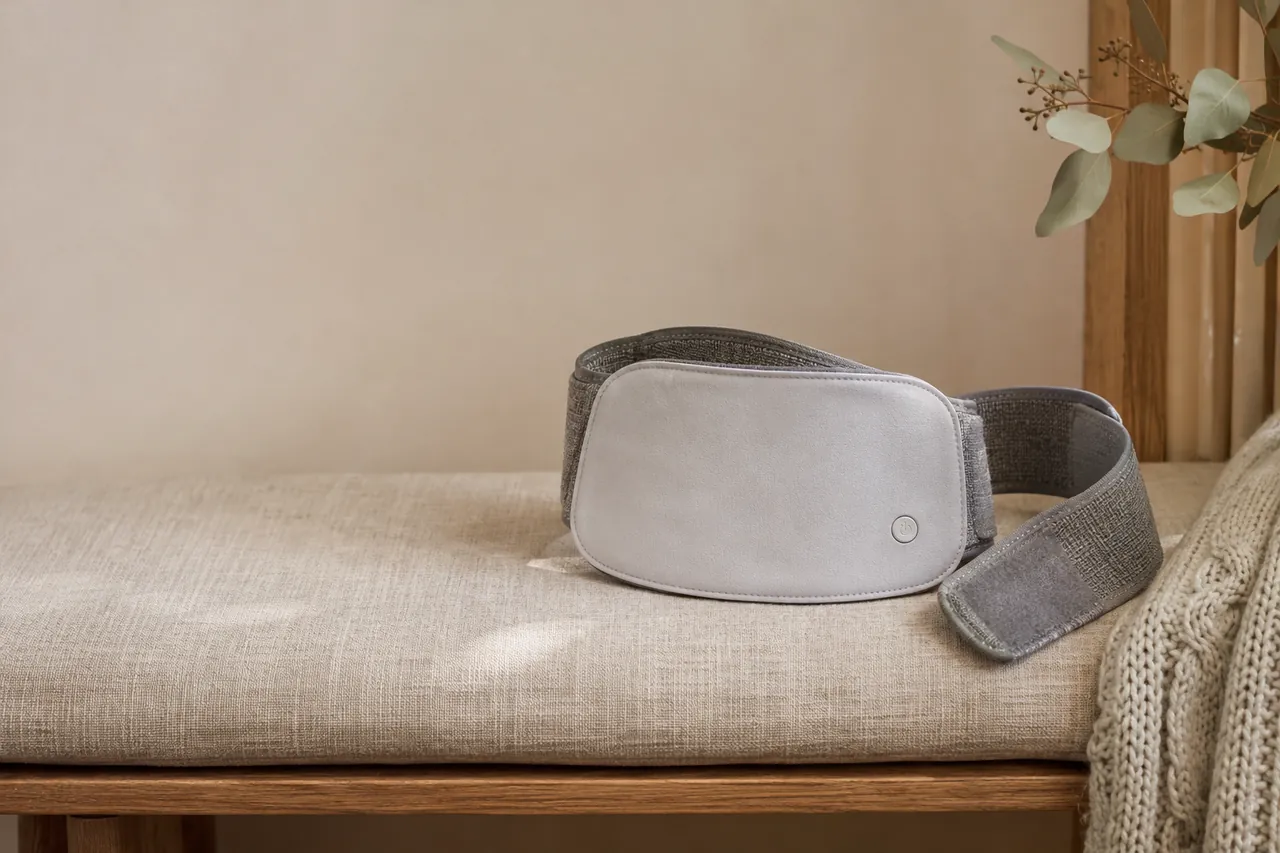
Sunbeam’s GoHeat Cordless Heating Pad is a rechargeable alternative with a strap. Its model 2000-825 manual warns against sitting on, leaning against, crushing or folding the pad. Read the instructions for the actual version and charger offered, including its placement and care directions. A product page for another market does not establish UK availability or electrical compatibility. The 2000-825 instructions also say the pad must not be used by people with diabetes, poor circulation or insensitivity to heat, or by children and people who are sleeping or unable to respond. Check all restrictions on the model’s label.
These examples illustrate different designs, not a ranking. The best choice depends on the area to be warmed, whether the product needs to stay in place, how it is powered and whether you can follow its instructions in your intended position. A retail listing’s photos are helpful, but the model number and complete specifications are more useful for comparing two similarly named products.
Care is another meaningful difference. A removable or washable cover can simplify cleaning, but not every heating appliance can be washed in the same way. Check whether the product has a detachable controller or battery and follow its own instructions before cleaning. Spot-clean-only care, as listed for the WeightedWarmth body pad, calls for a different routine from a machine-washable model. Let any cleaned components dry as directed before reconnecting power.
Where UK shoppers can start looking
Argos has a heat-pad category with a postcode search for local availability. One listing is the Beurer Soft Cosy Heat Pad (Argos item 706/0139). Argos describes it as a mains-operated pad with three heat settings, a handheld control and a 90-minute automatic shutoff. Its removable controller allows machine washing as directed; disconnect the power and controller before cleaning. Open the individual item before deciding: the category also includes products intended for other parts of the body. Boots provides period-care information and describes heat patches as another format to consider.
A UK category page is a starting point, not a stock check. Enter a postcode, select the exact item and look at its collection or delivery options before planning a trip. If the listing offers several sizes or colours, select the intended version before reading its price and availability. For a single-use patch, note the number in the box so you can compare the purchase with a reusable product over the number of uses you expect.
Review the returns terms for the item before buying and keep your receipt or order record. A shop’s returns policy and a manufacturer’s guarantee are separate sets of terms. Check which seller supplied the product if a marketplace listing appears alongside items sold directly by the retailer.
Read reviews for the exact version
Reviews can help you notice practical questions that a product title omits. Look for comments about strap fit, the position of the controller, ease of cleaning and whether the pad covers the intended area. Read a range of recent and older feedback instead of treating one experience as a promise of the same result.
Make sure reviews refer to the same model and version. A weighted body pad, a corded abdominal wrap and a rechargeable belt may share a brand name but have different instructions and power arrangements. An editorial guide such as Good Housekeeping’s heating-pad roundup can help identify comparison criteria; it does not replace the manual for the item you choose.
The label matters after purchase, too
Follow the individual product’s instructions for placement, cleaning and the length of use. An automatic shutoff is a device feature, not a prescription to apply heat until the timer ends. Stay awake while using an electric pad, keep the controls accessible and do not put a pad under body weight when the instructions prohibit it.
Check your skin frequently and stop if the warmth becomes uncomfortable or you notice irritation. Cleveland Clinic describes toasted skin syndrome as a skin change associated with repeated heat exposure. Do not microwave an electric pad or its controller; microwave only a separate pack whose own label permits that preparation.
For period pain, NHS 111 Wales suggests a heat pad or hot-water bottle wrapped in a tea towel on the tummy. Use your product’s label alongside that guidance. Pain that regularly disrupts daily activities deserves medical evaluation. Seek emergency care if pelvic pain is severe, worsening or painful with movement or touch, or if it occurs with faintness, dizziness, shoulder-tip pain, difficulty breathing, heavy vaginal bleeding or sudden confusion. If you have pelvic pain and are pregnant or might be pregnant, seek urgent medical advice.
Keep a note of the exact model, its power information and the selected retailer before comparing alternatives. For a plug-in product, the label and supplied power unit need to match the UK supply; for a patch, placement and pack count matter instead. Save the order record and instructions together so the particular product’s care and return details remain easy to find.
References
Electrical Safety First — United Kingdom travel adaptors: https://www.electricalsafetyfirst.org.uk/safety-advice/travel-advice/united-kingdom/
NHS 111 Wales — Periods, painful: https://111.wales.nhs.uk/encyclopaedia/p/article/periods%2Cpainful?locale=en
Boots — How to help treat period pain: https://www.boots.com/healthhub/pain/pelvic-pain/symptoms-and-treatment-of-period-pain
Argos — Heat pads and heat therapy: https://www.argos.co.uk/browse/health-and-beauty/health/heat-therapy/c:29221/type:heat-pads/
Good Housekeeping — Heating pad buying guide: https://www.goodhousekeeping.com/health-products/g30647898/best-heating-pads/
Pure Enrichment — PureRelief Lumbar & Abdominal Heating Pad: https://pureenrichment.com/products/purerelief-lumbar-abdominal-heating-pad-gray
Pure Enrichment — WeightedWarmth Weighted Body Pad with Heat: https://pureenrichment.com/products/weightedwarmth%E2%84%A2-weighted-body-pad-with-heat
Sunbeam — GoHeat Cordless Heating Pad: https://www.sunbeam.com/pain-relief/general-muscle-pain/sunbeam-goheat-cordless-heating-pad/SP_438956.html
GoHeat 2000-825 user manual: https://newellbrands.imgix.net/ebc87331-047b-3ddc-a7bf-c7795cb72a72/ebc87331-047b-3ddc-a7bf-c7795cb72a72.pdf
Cleveland Clinic — Toasted Skin Syndrome: https://my.clevelandclinic.org/health/diseases/toasted-skin-syndrome
Pure Enrichment — PELUMBAR-G user manual: https://pureenrichment.zendesk.com/hc/en-us/article_attachments/30751208798491
NHS — Pelvic pain: https://www.nhs.uk/symptoms/pelvic-pain/